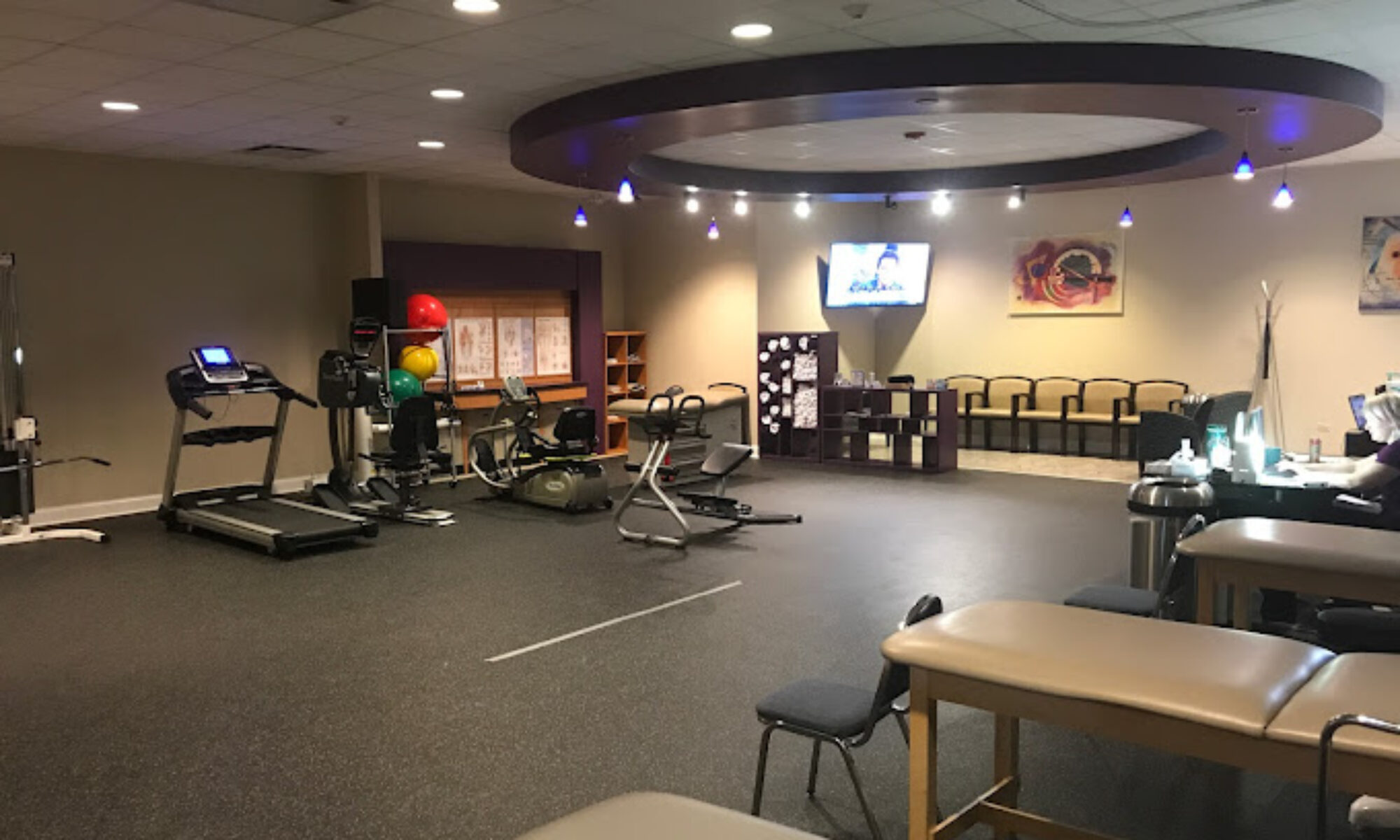

The value of physical therapy and rehabilitation has been closely examined and highlighted over the last month. Therapy services offer various treatments that aim at restoring, maintaining, or enhancing a patients’ physical capabilities after an illness, injury, or surgery. To meet patients’ needs, healthcare facilities are rolling out comprehensive rehabilitation programs that focus on offering quality physical therapy and other related services.
Some notable facilities include the UT Health East Texas Rehabilitation Center and HSS Pediatric Rehabilitation and Young Athlete Center. At the UT Health East Texas Rehabilitation Center, rehab programs are developed to help restore mobility and improve the function of patients. The Center offers several inpatient and outpatient rehabilitation services, including acute care services, to help patients regain their independence and optimal health.
Hemodialysis treatment, physical therapy, occupational therapy, and specialized programs for conditions like Parkinson’s disease are among the inpatient treatments available. These treatments are designed to aid the recovery process of patients and ensure they get back to their normal lives as soon as possible.
Remarkably, there are medical programs to cater to patients who have lost limbs, focusing on their physical and emotional wellbeing to help them regain their mobility. In addition, the UT Health East Texas Rehabilitation Center provides pastoral care services, with a licensed chaplain available to counsel and support patients spiritually. Furthermore, the Center’s rehabilitation and nursing services assist patients suffering from disabilities and chronic illnesses to adapt to new lifestyles and maintain optimal health.
Outpatient rehabilitation services at the UT Health East Texas Rehabilitation Center range from aqua therapy, where patients’ mobility is restored through water-based exercises, to lymphedema management services. Patients diagnosed with Parkinson’s disease aren’t forgotten either, as the Center also runs program designed to promote functional mobility and manage the disease’s progression. To more comprehensively address mobility and physical functionality issues, orthotic therapy and total joint replacement therapy services are also offered.
On the other hand, the HSS Pediatric Rehabilitation & Young Athlete Center specializes in pediatric outpatient rehabilitation for young people in New York City. The Center houses therapists who specialize in neurodevelopmental, orthopedic, and sports rehabilitation. An equipment and assistive technology clinic supports children who need mobility equipment, while young athletes get tailored therapy programs combining clinical expertise and the latest technology to rehabilitate, enhance sports performance, and reduce injury.
The HSS Center practices a kid-centric and holistic approach to rehabilitation, with personalized programs ranging from consultations to intensive rehabilitation. Consultation with healthcare professionals like pediatricians, physiatrists, orthopedic surgeons, and neurologists forms a critical part of the overall program to achieve the best possible outcomes for every child under their care.
In conclusion, rehab and physical therapy services continue to transform lives and present a holistic approach to the recovery journey. These services demonstrate undoubted benefits by returning patients to their normal lives. They have proven to be efficient and effective strategies in facilitating post-illness or post-injury recovery. By being tailor-made to suit each patient’s unique needs, these programs continue to foster hope, courage, and resilience among patients and their families.
Physical therapy services and treatments are developing and expanding in order to address a broad range of health conditions and to better serve patients and communities. This burgeoning field involves applying innovative therapeutic and rehabilitative exercises, and advanced technology to enhance patients’ recovery process and quality of life, putting them back on their path to wellness.
The Mayo Clinic’s Physical Medicine and Rehabilitation department (PM&R) offers tailored treatment and rehabilitation options for various medical conditions impacting the brain, spinal cord, nerves, and musculoskeletal system. As the cornerstone of their program, PM&R physicians and care teams aim to restore function, essentially aiding patients to regain the highest possible level of independence and quality of life.
The expert rehabilitation teams at Mayo Clinic treat both traumatic and nontraumatic injuries, providing physical examinations of bones, joints, and muscles, as well as offering patient-customized health plans. They utilize gaming and esports medicine, adaptive athlete medicine and offer pediatric rehabilitation services. Physical therapy in Mayo Clinic includes the use of physical modalities like advanced therapeutic exercises, manual therapy, custom orthotics, ultrasound, and patient education opportunities.
Mayo Clinic PM&R also strives to improve assistive and restorative technology within its rehabilitation sphere. Their Assistive and Restorative Technology Laboratory (ART Lab) and other PM&R facilities contribute to extensive research directed at advancing rehabilitation science with advanced technological solutions. They employ a range of modern technologies including 3D computer technology and printing for braces, assistive technology for spinal cord injuries, walking assessments, functional electrical stimulation, and consultations approaching multiple conditions, among other things.
This commitment to research and innovation extends into their clinical trials. Patients are encouraged to inquire about potential opportunities to participate in trials, which form a significant part of PM&R’s mission to deliver the best care.
This patient-focused approach is also evident in the ease of accessibility to Mayo Clinic services. Patients can either directly request a consultation with a Mayo Clinic physician or obtain a referral from their primary care doctor. Mayo Clinic provides both short-term and long-term outpatient care programs. Such services are available at Mayo Clinic Health System locations in Minnesota, Wisconsin, and Iowa.
In similar strides, Sanford Health West Fargo is now providing physical therapy services, expanding its offerings for community members. Physical therapy forms a critical part of the rehabilitation process because it helps steer patients back to their regular routines, aids injury prevention, and promotes the steady recovery of mobility.
The Therapists at Sanford Health provide patients with personalized services, including dry needling, LSVT BIG treatment for Parkinson’s, lymphedema therapy, orthopedic care, pain management, stroke rehabilitation, and women’s health care, among others. Sanford West Fargo offers physical therapy appointments Monday through Friday.
Overall, these developments, notably from Mayo Clinic and Sanford Health, highlight the crucial role physical therapy plays in the healthcare sector. By adopting a patient-centered, technologically advanced, and a comprehensive approach, physical physicians and teams help improve patients’ lives and enhance the quality of rehabilitation services.
Title: Expanding Physical Therapy Services: Veterans Affairs and JAG Physical Therapy Forge Ahead
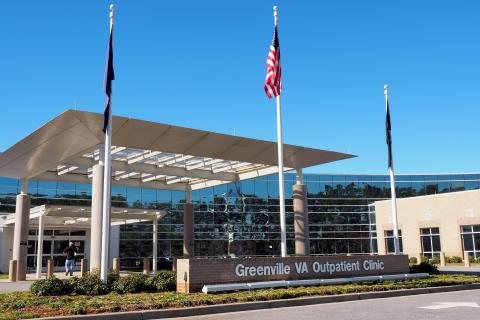
As access to high-quality healthcare continues to be a top priority, physical therapy services across the United States are advancing and expanding. Among them, the Lance Corporal Dana Cornell Darnell VA Clinic and JAG Physical Therapy have reached new milestones in a bid to enhance patient care.
Serving the Brave: An Overview of Veterans Affairs Services
With strong commitment to providing care for veterans, Disabled American Veterans (DAV) and county Veterans Affairs directors collaborate to ensure transportation for veterans and authorized caregivers heading to scheduled medical appointments. This service, known as the DAV van services, though having varying schedules, has been instrumental in providing care accessibility for veterans.
In addition to DAV services, other non-DAV van services are made available by different localities in the region, providing an extra convenience for veterans seeking care. Soon to be incorporated into the existing transportation ecosystem is a shuttle service. Its introduction promises to stretch the reach of transportation services, eliminating barriers to medical care for veterans.
Another exciting feature the Veterans Affairs is looking to unveil is the Beneficiary travel benefits. These travel benefits, hinged on eligibility, include round trip transportation from beneficiaries’ homes to the medical centre, mileage reimbursement, or special mode transport. With these services, the Veterans Affairs underlines its commitment to ensuring unhindered access to care for veterans.
JAG Physical Therapy: A Monumental Milestone in Staten Island
Orthopedic physical and occupational therapy services provider, JAG Physical Therapy, has marked a pivotal moment with the opening of its 10th Staten Island facility. The outpatient rehabilitation care provider, which has a track record of over 20 years serving patients and sports teams across the Northeast, is determined to extend its professional touch to the Arden Heights neighbourhood.
The new facility, located at 758 Arthur Kill Rd. in Arden Heights, signals a tremendous stride in the expansion of JAG Physical Therapy’s services. “JAG Physical Therapy is excited to expand our service reach in Staten Island. We look forward to serving the Arden Heights community with compassion and consideration at the forefront,” Stephanie Maisano, the Clinical Director overseeing the location, remarked.
The Arden Heights community and its environs will be able to access an array of high-quality care tailored to a wide range of health concerns. This new facility, according to Maisano, will give patients the right treatment plan to help them reclaim the life they love. With an increased access to unrivalled care, the facility adds value to Staten Island, as it offers solutions that help patients find their pathway to recovery.
On both fronts, the Lance Corporal Dana Cornell Darnell VA Clinic and JAG Physical Therapy represent a steadfast commitment to the continuous adaptation and advancement of physical therapy services. With a combination of innovative technology, holistic treatment approaches, and a patient-centric philosophy, these establishments ensure they meet the needs of their patients, while also addressing larger societal health care demands.
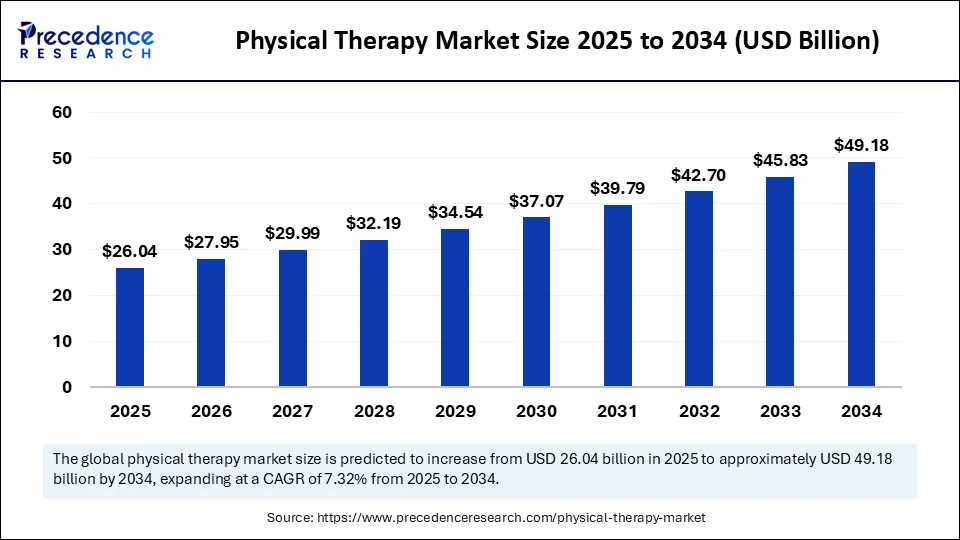
Increasing awareness about musculoskeletal health, a surging geriatric population, and a growing demand for rehabilitation services post injuries or surgeries have led to a growth in the global physical therapy market. From 2025 to 2034, the market is expected to grow at a CAGR of 7.32%, reaching around USD 49.18 billion by 2034 from USD 26.04 billion in 2025. Basic year considered for the market size is 2024.
Artificial Intelligence (AI) is revolutionizing the physical therapy market with data-driven, personalized rehabilitation strategies. It can track patients’ progress in real-time, predict recovery timelines, and precisely adjust therapy plans. It uses motion sensors, computer vision, and machine learning algorithms to monitor movements and provide immediate feedback, substantially reducing the requirement for consistent in-person supervision. AI is helping improve treatment efficacy and expand quality care accessibility, especially in remote or underserved locations.
North America dominated the market due to prominent awareness about physical rehabilitation, a well-developed healthcare infrastructure, and a high prevalence of chronic and lifestyle-related conditions. Insurance coverage for physiotherapy services, high adoption of advanced rehabilitation technologies like AI-powered assessment tools, wearable devices, and robotic therapy systems, and a large pool of licensed physiotherapists also contribute to North America’s largest market share.
Asia Pacific is expected to grow the fastest during the forecast period owing to the modernizing of healthcare infrastructure, increased disposable incomes, rising awareness about the advantages of rehabilitative care, and increased incidences of chronic diseases due to lifestyle changes and urbanization. The rapid growth of physiotherapy clinics, digital health platforms, and outpatient centers offering high-quality, affordable physical therapies boosts the market growth in this region.
Aging population is a key factor driving the global physical therapy market growth. The rise in chronic conditions, such as stroke and arthritis, is leading to higher demand for physical therapy services. There has also been an increase in health consciousness post the pandemic, driving more people towards preventive and therapeutic care.
Post-operative rehabilitation is particularly required, especially for patients recovering from orthopedic and neurological surgeries, resulting in tailored therapeutic interventions. The rising demand for outpatient and home-based care models is driving the need for mobile physical therapy services, supported by advanced technologies like AI integration, virtual reality environments, and robotic rehabilitation systems. Increased insurance coverage for physiotherapy services and growing public awareness of preventive healthcare solidify the role of physical therapy in modern wellness strategies.
Despite promising growth, the physical therapy market still faces some challenges. The shortage of skilled physiotherapists, especially in rural and low-income regions, and high costs related to advanced rehabilitation equipment and therapies, can hinder market growth.
Physical therapy’s scopes are high in emerging economies due to rising disposable incomes, increased health awareness, and government initiatives to improve healthcare access. Promising opportunities lie in home-based care and telerehabilitation. The increasing awareness about fitness and wellness, particularly among urban populations, also present opportunities for physical therapy to evolve from a curative to a preventive decision and lifestyle-oriented service.
Orthopedic physical therapy dominated the market due to the high prevalence of musculoskeletal disorders, sports injuries, and post-surgical rehabilitation needs. However, the neurological physical therapy segment is expected to grow the fastest due to increasing stroke, Parkinson’s disease, spinal cord injuries, multiple sclerosis, and traumatic brain injuries.
Meanwhile, the adults segment dominated the market with the increased prevalence of lifestyle-related musculoskeletal issues and occupational injuries. The elderly segment is expected to grow the fastest due to rising life expectancy global and increased cases of age-related conditions.
The hospitals section, with comprehensive rehab infrastructure, skilled professionals, and access to multidisciplinary care, dominated the physical therapy market. Though, outpatient clinics are set to grow fastest in the future. On the other hand, the therapies segment maximized the market share due to their proven effectiveness in managing many conditions while the equipment segment would grow rapidly because of demand for technologically advanced tools.
The increasing prevalence of chronic and age-related conditions, such as osteoarthritis, cardiovascular diseases, and Parkinson’s disease, is driving the growth of the physical therapy market. As life expectancy increases globally, the demand for non-invasive, long-term rehabilitation solutions will also grow exponentially. Finally, a rise in sports-related injuries and road accidents considerably boosts the need for physiotherapy services.
Sources: BusinessWire, IANS.
Sources:
 Physical Therapy and Rehabilitation
 HSS Pediatric Rehabilitation and Young Athlete Center
 Physical Medicine and Rehabilitation – Overview
 Physical Therapy Services Now Available at Sanford West Fargo
 Lance Corporal Dana Cornell Darnell VA Clinic | VA Columbia South Carolina health care | Veterans Affairs
 JAG Physical Therapy celebrates opening of 10th Staten Island facility
 Physical Therapy Market Size to Hit USD 49.18 Billion by 2034

