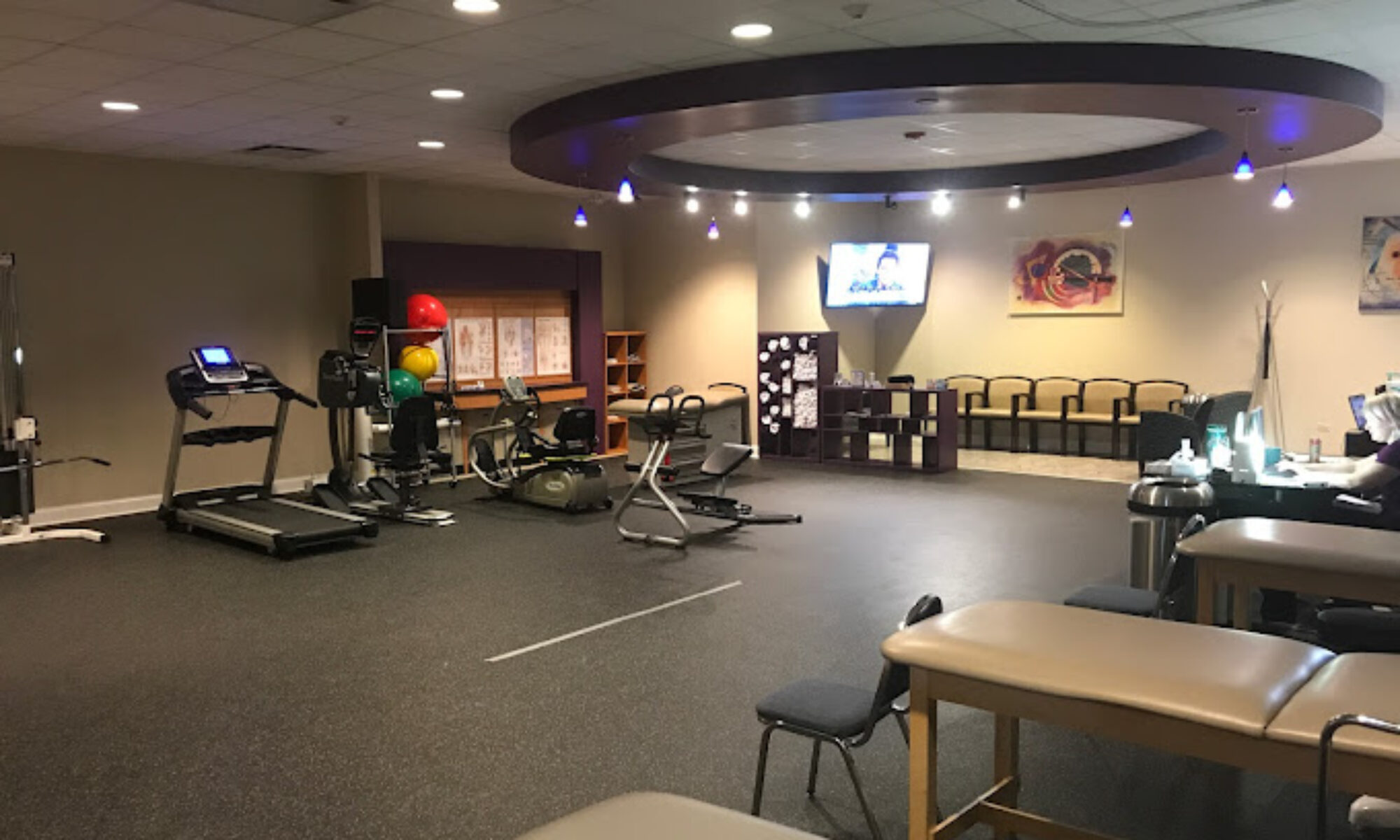

Physical therapy and rehabilitation are beneficial for individuals of all ages, from those suffering from severe illnesses to those recuperating from surgeries or injuries. It aids in restoring mobility, function, and independence to a person’s life. An overview of the benefits and services of both in-house and outpatient physical therapy and rehabilitation is given based on the latest articles from reputable medical and health organizations.
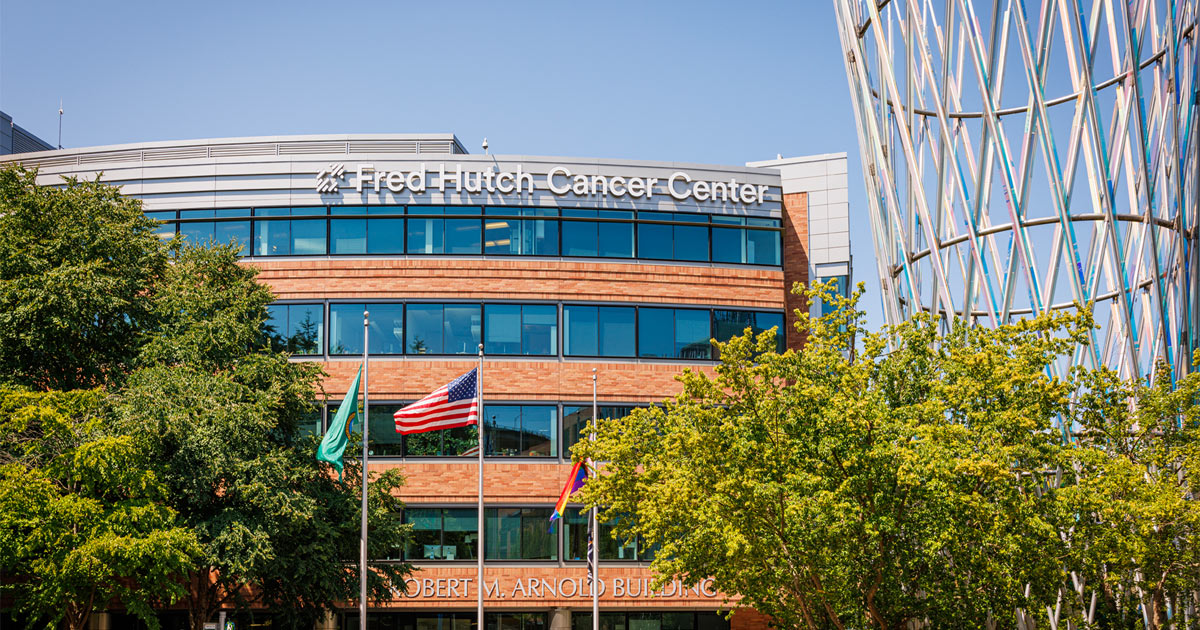
Physical therapy serves multiple purposes, such as helping cancer patients regain strength and functionality. Physical therapists at Fred Hutch provide services for issues related to weakness, balance, scar tissue, lymphedema, range of motion, and training patients in using rehabilitation equipment. To get these services, patients need to be referred by a Fred Hutch physician, physician assistant or nurse practitioner. They especially lend their services to patients struggling with oncological problems.
When discussing institutions that offer top-of-line physical rehabilitation, the UT Health East Texas Rehabilitation Center deserves mention. Their rehabilitation programs are designed to facilitate patients to regain their independence and optimal health status. Their rehabilitation center provides acute care services with advanced therapeutic methods.
The inpatient rehabilitation services offered by the center include access to a Level 1 Trauma center, diagnostic and laboratory services, hemodialysis services, and limb loss rehabilitation. In addition, they deliver occupational therapy services and pastoral care, alongside which they provide physical therapy and psychological services. They also extend specialized services such as stroke rehabilitation, transitional living apartments, VitalSim, and wound care services.
Their outpatient services involve advanced aquatic therapy, balance and vestibular programs, cardiopulmonary rehabilitation, dry needling, and programs specifically tailored for patients with Parkinson’s. They also offer speech therapy, orthotic therapy, lymphedema management, and a limb loss rehabilitation program. Pain relief and restoring physical functions are key goals of these services, and they assist patients to reintegrate themselves into normal life smoothly post their treatment phase.
Personalized pain management and emotional support, alongside vital therapy plans and training in the use of prosthetics, are a significant aspect of limb loss rehabilitation. Occupational therapy services help patients care for themselves and relearn daily living skills, which also include home evaluations and post-discharge support.
In line with physical therapy’s multifaceted role, the center offers orthotic therapy, which attends to a variety of disabilities and injuries, including those related to orthopedics, occupation, neurology, and arthritic conditions. The team of physical therapists specializes in the fabrication and monitoring of casting or splinting to prevent joint deformity and aid in post-surgery recovery.
In the case of cardiopulmonary rehabilitation, the program offers a comprehensive set of strategies including exercises, breathing techniques, medication, and more. This is engineered towards helping patients manage their heart or lung conditions. Dry needling, a therapy involving the insertion of thin needles into specific points in muscles, is another technique offered to alleviate musculoskeletal issues such as chronic pain, muscle tightness, and sports injuries.
Conclusively, physical therapy and rehabilitation are services that cater to a broad spectrum of health conditions. From helping cancer patients to aiding those with heart and lung conditions, limb loss, chronic pain, Parkinson’s, and more, these services are integral healthcare components. They demonstrate a commitment to restoring optimal health and functionality for every patient, facilitating their return to regular life activities post-treatment.
Physical Therapy Services and Treatments: Latest Developments and Big Steps
In the realm of physical therapy, recent developments have reinforced the critical impact of personalized, high-quality services on patient recovery. From pediatric rehabilitation centers to the expansion of existing healthcare facilities, the physical therapy landscape continues to evolve and enhance patient care.
HSS Pediatric Rehabilitation and Young Athlete Center Offering High-Energy Environment and Comprehensive Care
The Hospital for Special Surgery (HSS) in New York City has recently opened a Pediatric Rehabilitation and Young Athlete Center. This state-of-the-art facility established on Manhattan’s Upper East Side meets the rehabilitation requirements of children and young adults in a setting particularly designed with patient comfort and privacy in mind.
The heart of the center is a multidisciplinary team made up of physical, occupational, and speech therapists with specializations in neurodevelopmental, orthopedic, and sports rehabilitation. Young athletes can benefit from tailored programs that use this diverse expertise to address rehabilitation needs, enhance sports performance, and minimize injury risk.
Newborns to toddlers requiring developmental services have a dedicated area where they can improve motor skills, functional abilities, balance, and coordination. The center also features occupational therapy and speech therapy spaces equipped with advance therapy equipment like SMART Boards™ and child-centric amenities.
The HSS center also extends its support to children needing assistive technology and mobility equipment. From consultation to intensive programs, their childcare experts ensure that the treatments are engaging and adapted to each child’s needs.
Sanford Health West Fargo: A Home for Expert Physical Therapy Services
Meanwhile, Sanford Health West Fargo has announced its newest offering – physical therapy services. Offering these services marks a significant step in improving the speed, quality, and efficiency of the rehabilitation process, helping patients resume their normal routines sooner while avoiding future injuries.
At Sanford, patients receive one-on-one attention from experienced physical therapists committed to their body’s healing rate and recovery. These therapists specialize in assessing, treating, and preventing mobility injuries and disorders, aiding patients regain their mobility safely.
David Tompkins, Sanford Health’s lead physical therapist, expressed excitement over this expansion. He said, “Physical therapy plays such a big role in our patient’s recovery and goal of returning to normal life. This new location helps us expand our services and also invests in providing care to close to home.”
The West Fargo branch flaunts a comprehensive offering of services and therapies, including dizziness and imbalance treatment, dry needling, LSVT BIG treatment for Parkinson’s, lymphedema therapy, orthopedic care, pain management, postoperative services, stroke rehabilitation, and women’s health care.
Understanding that prompt intervention is crucial in the recovery process, Sanford West Fargo operates from Monday to Friday, 7 a.m. to 5 p.m., making physical therapy more accessible to the community.
In essence, both HSS and Sanford Health reinforce the importance of a personalized approach to physical therapy as they continue to invest in equipment, training, and facilities. These developments highlight a broader shift in healthcare that recognizes the patient as an active participant in their own treatment path, moving beyond traditional one-size-fits-all recovery models. Clearly, physical therapy services are making big strides to provide more effective, comprehensive, and convenient care for every patient.
Title: The Potential of Current Physical Therapy Services and Treatments: Market Insights and Novel Applications
Introduction
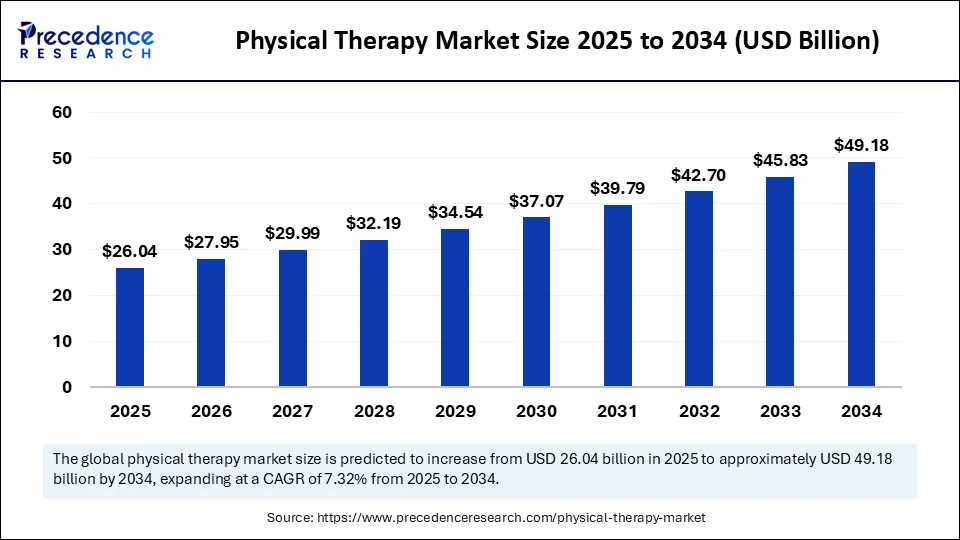
The market for physical therapy services is booming, with predictions indicating its size will reach approximately USD 49.18 billion by 2034, showing a Compound Annual Growth Rate (CAGR) of 7.32% from 2025 onwards. Factors contributing to this growth include increased awareness of musculoskeletal health, a rising elderly population, and growing demand for rehabilitation services following injuries or surgeries. Additionally, novel technologies such as Artificial Intelligence (AI) are reshaping traditional rehabilitation practices, making it an exciting field with numerous opportunities for growth and innovation.
AI Reshaping the Future of Physical Therapy Market
Artificial Intelligence (AI) is revolutionizing the landscape of the physical therapy market by introducing data-driven and personalized rehabilitation strategies. AI-powered platforms can track patient progress in real-time, predict recovery timelines, and adjust therapy plans accurately. They use motion sensors, computer vision, and machine learning algorithms to monitor movements, provide instant feedback, and significantly reduce the need for constant in-person supervision.
AI also supports professionals by analyzing vast datasets to identify trends, detect anomalies early and enhance diagnostic accuracy. The transformation optimizes treatment efficacy, expanding access to quality care. From robotic-assisted therapy to intelligent wearables that assess muscle activity, AI is helping create a more personalized, proactive rehabilitation model.
Digital Health and Tele-Physiotherapy
One significant trend shaping the physical therapy industry is the rise of telehealth platforms. These platforms enable remote consultations, assessments, and guided therapy sessions, allowing patients to receive tailored exercise plans and real-time feedback. This advancement provides particularly valuable service in rural and underserved regions, easing the burden on physical clinics.
AI and Machine Learning Integration
Tools driven by AI and Machine Learning (ML) are being used for motion analysis, predictive recovery modeling, and automated progress tracking. Computer vision and wearable sensors allow for a precise evaluation of patient movements, aiding in form correction and injury prevention. These smart algorithms enable clinicians to optimize therapy plans, reducing recovery times and improving clinical outcomes.
Wearable Technology and IoT in Rehabilitation
Devices such as smart braces, fitness trackers, and muscle stimulators integrate into rehabilitation protocols. They provide continuous biomechanical and physiological data, assisting therapists in monitoring adherence and effectiveness.
Geographic Trends
Presently, North America dominates the market, holding 40% of the share due to a well-established healthcare infrastructure, widespread awareness about physical rehabilitation, and a high prevalence of chronic and lifestyle-related disorders. Europe is also witnessing significant growth due to an aging population and an increased focus on holistic, non-pharmacological approaches to pain and mobility management. Meanwhile, the Asia Pacific region is predicted to grow at the fastest pace, backed by rising modernization of healthcare infrastructure, growing disposable incomes, and increasing awareness about the benefits of rehabilitative care.
Forwarding Expanded Reach through Veteran Healthcare Services
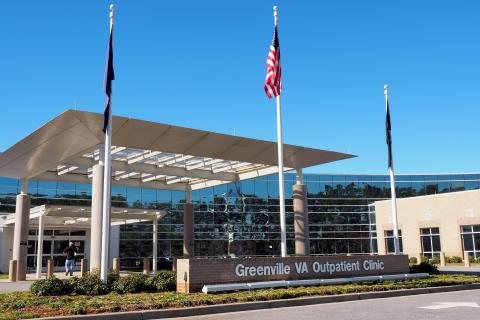
Physical therapy services are expanding its reach with novel initiatives like the transport service for veterans offered by the Disabled American Veterans and county Veterans Affairs. They provide transport for Veterans and authorized caregivers enabling them to reach scheduled medical appointments. Other services like the shuttle service, local transportation services, and beneficiary travel benefits considerably extend their access to physical therapy provisions.
Conclusion
The physical therapy market shows promising potential for growth and innovation. With advancements in technology like AI, ML, and IoT, physical therapy is transforming into a more personalized and effective form of treatment. The sector’s expansion into underreached demographics like veterans, coupled with an overall greater awareness of physical health post-pandemic, ensures that physical therapy will continue to be a cornerstone of healthcare strategies worldwide. The future holds exciting prospects for patients and practitioners alike in this rapidly evolving field.
Physical Therapy and Rehabilitation Services: Enhancing Mobility, Promoting Recovery
Physical Medicine and Rehabilitation represents a critical component of the healthcare system. These specialized medical services are driven by a commitment to help individuals regain function and mobility, improve quality of life, and attain their peak level of independence after injury or illness. Leading institutions like Mayo Clinic and UT Health Pittsburg have recently showcased the remarkable work they are doing in the realm of physical therapy and rehabilitation, providing crucial insight into current advancements and techniques in the field.
Mayo Clinic’s Comprehensive Approach to Physical Medicine and Rehabilitation
At Mayo Clinic, their team of specialists in Physical Medicine and Rehabilitation (PM&R) are dedicated to delivering personalized care that accommodates the unique needs, abilities, and objectives of each patient. The primary goal of the department is to restore function through a variety of treatments and therapies. This encompasses aiding patients in regaining maximal muscle ability, retraining mental pathways, and maximizing their quality of life.
The PM&R department at Mayo Clinic is known for its broad expertise, extending to treating traumatic and nontraumatic injuries, reviewing medical imagery, and conducting physical examinations. They offer a plethora of services including bone, muscle, and soft tissue therapies, gaming and eSports medicine, adaptive athlete medicine, and pediatric rehabilitation.
A key feature of the Mayo Clinic model is its focus on assistive and restorative technology. They employ technologies like 3D computer technology for devices like hand/wrist braces, assistive technology for spinal cord injuries, walking assessments in the Motion Analysis Laboratory, functional electrical stimulation, and advanced prosthetics for individuals with amputations. Clinical research also plays an integral part in Mayo Clinic’s commitment to providing the best care possible and advancing the science of rehabilitation.
UT Health Pittsburg’s Broad Spectrum of Rehabilitative Care
On the other hand, UT Health Pittsburg is making remarkable strides in the domain of physical therapy and rehabilitation services. The rehabilitation team here is credited with providing comprehensive rehabilitation services for an array of medical conditions like balance disorders, joint pain, cardiopulmonary disease, and neurological conditions like stroke. The objective is to enhance independence and improve the quality of life for their patients.
UT Health Pittsburg also proffers an innovative in-home rehabilitation service in alliance with Choice Health At Home. This concept is aimed at delivering quality care in the familiar surroundings of the patient’s home. Various services are included like physical therapy and rehabilitation, alongside specialized rehabilitation and hospice care.
Additionally, they offer a Swing Bed program designed for patients transitioning from acute care back to the community. The program focuses on short-term rehabilitative services and medical care tailored to the patient’s needs. Patients remain in the same hospital room cared for by the same hospital staff while they heal and regain the strength necessary to return home.
Final Thoughts
Rehabilitation medicine and physical therapy continue to evolve as a crucial aspect of the healthcare field. They address a broad range of conditions and their services are personalized to meet the unique needs of individual patients. Mayo Clinic and UT Health Pittsburg represent just a couple of the leading institutes making significant strides in patient-centered care and rehabilitation services, helping individuals regain mobility, function and a better quality of life after illness or injury. Constant innovation, research and the implementation of advanced technologies into treatment plans will continue to enhance the success and effectiveness of physical medicine and rehabilitation in the coming years.
Sources:
 Benefits of Physical Therapy
 Physical Therapy and Rehabilitation
 HSS Pediatric Rehabilitation and Young Athlete Center
 Physical Therapy Services Now Available at Sanford West Fargo
 Physical Therapy Market Size to Hit USD 49.18 Billion by 2034
 Lance Corporal Dana Cornell Darnell VA Clinic | VA Columbia South Carolina health care | Veterans Affairs
 Physical Medicine and Rehabilitation – Overview
-
Physical Therapy and Rehabilitation

