
the full “State of Direct Access to Physical Therapist Services” report from the APTA website.
3. Physical Therapy for COVID-19 Related Complications
Mount Sinai Rehabilitation Center recently highlighted the growing significance of physical therapy for individuals suffering from long-term effects of COVID-19, often termed as “long-haulers”. Long-COVID often leads to a loss of physical function, fatigue, persistent shortness of breath, and cognitive difficulties. Patients may also experience exacerbation of underlying chronic conditions.
A holistic approach to rehabilitation is crucial for recovery and physical therapists form an essential part of the multidisciplinary team assisting long-COVID patients. They can help restore function and mobility, negate the effects of deconditioning from hospitalization or prolonged bed rest, address balance problems, and also assist in managing fatigue and breathlessness.
Megan Hershman, DPT, and Ashley Harris, DPT, physiotherapists from Mount Sinai Rehabilitation Center, spoke on the role of physiotherapists in COVID-19 care. They emphasize the importance of customizing therapy based on a patient-centered approach. They also highlighted the use of telehealth services due to the current pandemic. This provides access to physiotherapy services without risking exposure.
Physical therapists are also critical in the education and guidance for patients’ self-management of their condition. With research still ongoing regarding long-COVID, the importance of physiotherapy in patient recovery remains paramount.
4. Physiotherapy in Sports Rehabilitation
According to a recent report in the Journal of Orthopaedics & Sports Physical Therapy, physical therapy has become an integral part of sports medicine, serving athletes at all levels – from school and community sports to professional and Olympic levels. Rehabilitation exercises not only treat sports injuries but also prevent future injuries.
The American Physical Therapy Association (APTA) affirms that physical therapists, with their specialized knowledge of human kinetics, play a key role in maintaining the health of athletes. The physical therapists guide athletes through personalized programs that emphasize movement quality, enhancing performance, and injury prevention.
The physical therapists use various manual therapy techniques, advise on appropriate therapeutic exercises, and recommend equipment. They emphasize sports-specific tasks, strength conditioning, proprioceptive training, coordination activities, and aerobic conditioning. Neuromuscular training, a strategy mainly used for lower extremity injuries, combines strength training, balance training, and plyometric exercises.
Various therapeutic exercises not only aid in injury recovery but also increase strength, flexibility, endurance, coordination, and balance. In addition to promoting healing and conditioning, physical therapy plays a major role in educating athletes about their bodies and instilling a mindset of injury prevention. Therefore, physical therapists have become an essential part of a sports team’s support staff, contributing significantly to athletes’ long-term health and performance.
In summary, physical therapy services play important roles in various areas ranging from regular health care to sports medicine and to recovery from major conditions like COVID-19 or surgical procedures. With the increasing direct access to physical therapy by patients, the scope of physiotherapy services has broadened. Targeted physiological interventions, patient education, pain management, functional training, and promoting a mindset of prevention are now integral components of modern healthcare. Newer approaches like telehealth have further expanded the reach and effectiveness of physical therapy treatments. As our understanding and approach towards health and wellness continue to evolve, the role of physical therapy in patient care and recovery is set to become even more significant.
Title: The Expanding Reach of Home Physiotherapy and Other Services
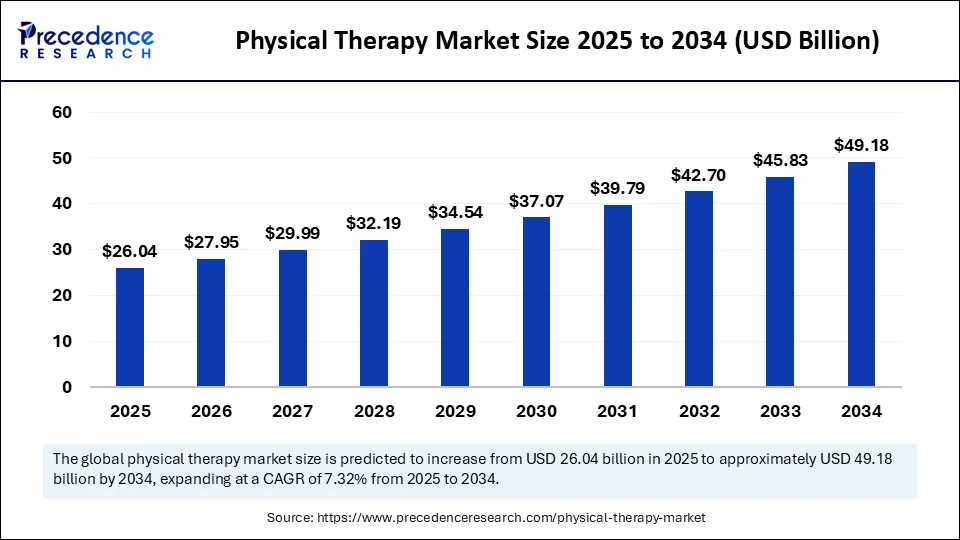
“Physiotherapy at home” is an evolving concept in the healthcare industry that is projected to grow from US$ 15.5 billion in 2024 to US$ 28.7 billion by 2034, highlighting a CAGR of 6.7% during 2025 to 2034. It is a valuable form of physical therapy wherein certified physiotherapists assess, diagnose, and treat a variety of physical ailments in the comfort of the patients’ homes. This service has proven particularly beneficial for elderly patients and those on the mend from surgical procedures or accidents.
Several factors are driving the expansion of this market. An increasing number of people are recognizing the importance and effectiveness of physiotherapy for recuperation, injury prevention, and overall wellness. The growing geriatric population and prevalence of chronic disorders have sought at-home physiotherapy treatments. Additionally, advancements in wearable technology and telemedicine platforms have improved accessibility to these services, particularly for individuals dwelling in rural areas.
However, there are a few roadblocks hampering the rapid expansion of this market, such as issues with reimbursement, shortages of frontline personnel, and legal restrictions. Nevertheless, the home-physiotherapy market is predicted to continue growing, given its crucial role in improving the mobility, function, and quality of life of various age groups and people with different medical conditions.
Key market participants include Select Medical Corporation, Upstream Rehabilitation, Athletico Physical Therapy, U.S. Physical Therapy Inc., Genesis Rehab Services, Apollo HomeCare, and Practo Care Physiotherapy among others.
The use of electrical stimulators, wearable devices, and exercise equipment has seen a surge as a part of this treatment. Musculoskeletal therapy, post-surgical recovery sports injury rehabilitation, chronic pain management, and mobility impairment are some of the conditions benefitted from these services.
The Musculoskeletal Therapy segment of the at-home physiotherapy market is prospering due to global wellness trends and a heightened number of osteoarthritis cases, sports injuries, and post-surgical rehabilitation requirements. The availability of wearable sensors, telehealth platforms, and portable therapy equipment have facilitated high-quality musculoskeletal care at home.
The post-surgical recovery segment has recorded high growth rates encouraged by the push to reduce inpatient stays and the surge of elective and emergency surgeries. Advanced technologies such as wearable sensors, motion-tracking apps, and tele-rehabilitation platforms have allowed therapists to prescribe and monitor patient progress remotely, leading to an overall improvement in adherence and results.
Region-wise, North America leads the at-home physiotherapy market, backed by its sophisticated healthcare infrastructure, which includes high-quality facilities, skilled medical professionals, and robust regulatory frameworks. Furthermore, substantial investments in wearable technology, telemedicine platforms, and digital health solutions have contributed to remote monitoring and tele-rehabilitation services.
The Asia Pacific region is expected to see the fastest growth in this market, driven by changing lifestyles, increasing sedentariness, and the rising prevalence of musculoskeletal and chronic diseases. The widespread adoption of advancements in technology, such as AI-assisted exercise coaching, wearable tech, and telehealth platforms, has facilitated this growth.
In other news, Sanford Health West Fargo has recently introduced physical therapy services. The services offer patients the opportunity to recover at their own pace while avoiding future injuries. Their team, specialized in dizziness and imbalance treatment, dry needling, LSVT BIG treatment for Parkinson’s, lymphedema therapy, orthopedic care, and more, is available from Monday to Friday, from 7 a.m. to 5 p.m.
While at-home physiotherapy services are making headway in the healthcare sector, the integration of physical therapy services in existing health facilities like Sanford Health West Fargo promises a well-rounded approach to physical healing and rehabilitation. This comprehensive combination of at-home and clinic-based therapy services ensures the robust growth of the physical therapy industry, ultimately benefiting patients worldwide.
The field of Physical Therapy is growing, constantly evolving the skill sets and expertise among professionals. It’s regarded as a critical component of healthcare, catering to diverse patient needs. This article delves into two renowned entities extending exemplary physical therapy services and treatments.
At Hospital for Special Surgery (HSS) in Florida, world-class orthopedics services are provided for residents around the Miami area. The team consists of orthopedic surgeons, sports medicine doctors, nurses, physical therapists, anesthesiologists, and more who strive to offer the best orthopedic care. Patients are given individualized treatment and recovery plans with the aim to reduce or abolish pain, improve functional mobility, and restore the quality of life.
HSS Florida provides a plethora of orthopedic and sports medicine services, including outpatient surgery, physical therapy, imaging services, and nonsurgical orthopedic care. They also host the HSS Concierge Orthopedics program, which offers enhanced care options such as direct access to select physicians, extended care hours, flexible scheduling options, and private waiting and recovery spaces.
Surgery at HSS Florida is carried out by expert orthopedic surgeons specialized in various areas such as hand and upper extremities, shoulder, knee and hip replacements, spine surgery, sports medicine, and orthopedic trauma and injury. HSS Florida also emphasizes conservative orthopedic care, offering various types of injections and casting and bracing for conditions that don’t require surgery. The institution also employs state-of-the-art technology for diagnosis, such as high-resolution digital X-ray and MRI.
HSS Florida Rehabilitation and Performance hosts proficient physiotherapists treating injuries and pain in several parts of the body. Their sports performance specialists aid individuals aiming to prevent injuries and optimize their athletic performance.
On the other hand, the rehabilitation team at UT Health Pittsburg is committed to providing comprehensive rehabilitation services for various medical conditions, including cardiopulmonary problems and neurological conditions. Specialized programs aim at improving mobility, balance, strength, and endurance, along with managing orthopedic pain and aiding recovery from joint replacement surgeries.
The specialists use the latest techniques in physical therapy for a plethora of goals such as controlling shortness of breath, improving the quality of daily life activities, improving balance and posture, increasing strength and endurance, preventing or eliminating pain, and stimulating cognitive functions. Cardiac Rehabilitation is also offered—a medically supervised program designed to strengthen the heart and improve cardiovascular health.
Understanding the importance of receiving quality care at home, UT Health together with Choice Health At Home, delivers various services like physical therapy, rehabilitation, and hospice care at the comfort of the patient’s house.
In a bid to promote health and fitness, UT Health East Texas Olympic Centers offer a variety of fitness classes, personal training, and tailored fitness programs. The centers operate a medically-integrated approach to fitness with a variety of exercise programs designed to promote health.
It’s worthwhile to mention the Swing Bed Program at UT Health Pittsburg, designed to transition patients from acute hospitalization back to their previous level of independence. A short-term rehabilitative service, the program features various services like 24-hour emergency services, a fully equipped lab, nutrition therapy, pain management service, physical, occupational, and respiratory therapy, and more.
Patients with at least a three-day stay as an acute care patient, needing ongoing monitoring and rehabilitative care, patients with Medicare as their primary insurance, and those who’ve been referred by their physicians are all eligible for the swing bed program. The program is planned around individual needs, usually continuing for one to two weeks.
This overview of HSS Florida and UT Health Pittsburg underscores the dynamic evolution of physical therapy and rehabilitation services, continually enhancing healthcare outcomes for patients worldwide.
3. Physical Therapy: An Essential Service during the Pandemic and Beyond
Recently, physical therapy has gained heightened attention due to its pivotal role amid the COVID-19 pandemic, serving as an essential component of healthcare, rehabilitation, and recovery. The pandemic’s impact on people’s physical and mental health, coupled with an increase in remote work and home confinement, resulted in a rise in musculoskeletal and neuropsychological issues, thus leading to a surge in demand for physical therapy services.
Prolonged periods of isolation, anxiety, lack of physical exercise, and increased screen time have exacerbated musculoskeletal disorders such as neck pain, lower back pain, and shoulder pain among individuals of all age groups. In addition, those recovering from COVID-19, particularly those super-hit with severe infection or those in post-ICU care, needed complex, long-term physiotherapeutic interventions. Physical therapy has proven integral in managing these conditions, restoring function, reducing pain, improving quality of life, and promoting physical and mental well-being.
Furthermore, the rise of tele-rehabilitation or virtual physiotherapy sessions during lockdowns and travel restrictions provided an alternative to in-person therapy, ensuring continuity of care while maintaining social distancing protocols. Physical therapists swiftly adapted to this paradigm shift by harnessing digital tools to offer remote consultation, guidance, and monitor patient progress, showing the resilience and versatility of the profession.
As the world gradually reopens and life adjusts to the new normal, physical therapy continues to be a vital service aiding people’s return to daily activities, sport, and work. Whether helping an athlete recover from a sports injury, supporting an older adult maintain mobility, rehabilitation after trauma, or fostering workstation ergonomics for remote workers, physical therapists cater to diverse needs across population groups.
However, despite the surging demand, the industry faces challenges in reaching underserved communities, battling insurance and payment hurdles, and struggling with professional burnout. Thus, it becomes crucial to ensure that physical therapy services are included in healthcare policies, planning, and delivery while ensuring the well-being, career satisfaction, and progression of therapists. The recognition and inclusion of physiotherapists in interdisciplinary healthcare teams will also enhance collaborative care and patient outcomes.
As we advance, incorporating emerging technologies such as artificial intelligence, machine learning, wearable devices, and tele-rehabilitation platforms will shape the future of physical therapy. By harnessing these innovations, physiotherapists can improve diagnosis, treatment planning, patient engagement, and outcomes while delivering more personalized and effective care.
To summarize, the need for physical therapy is more significant than ever, driven by a multitude of factors ranging from demographic changes, chronic diseases, post-surgical rehabilitation, sports injuries, to lifestyle modifications. It continues to evolve as we learn and adapt to the changing healthcare landscapes. More than ever, there is a strong need for quality and accessible physiotherapy services to rebuild a healthier, agile, and resilient society post-pandemic.
4. Revolutionizing Physical Therapy Education with Simulated Learning
With the ever-evolving physical therapy field dictated by technological advancements, changing demographics, and a shift in healthcare delivery models, the education and training systems must keep pace to create competent practitioners efficiently and effectively. A promising approach lies in integrating simulation-based learning (SBL) into physical therapy curriculums, aimed at enhancing students’ clinical skills, decision-making, and patient communication. SBL offers immersive, interactive, and standardized learning experiences in a controlled, risk-free environment, complementing traditional teaching methods.
SBL tools entered the physiotherapy arena, enhancing the quality of education, aligning with global competency-based education (CBE) norms. Using high-fidelity manikins, standardized patients (SPs), task trainers, and virtual reality (VR) environments, SBL allows students to practice a wide range of clinical scenarios, procedures, and patient interactions, receiving immediate feedback and learn from their mistakes.
In addition to practical skills, SBL fosters critical thinking, clinical reasoning, teamwork, and communication skills, reinforcing a patient-centered approach. It interlinks theoretical knowledge with practical application, enhancing the overall understanding and retention of concepts. Learning can be individualized, allowing for repetition until mastered, reducing the risk of errors in real clinical settings.
Furthermore, SBL can bridge the gap in clinical rotation opportunities, particularly problematic during the COVID-19 pandemic when many in-person internships were canceled. Virtual Platforms like Body Interact and Oxford Medical Simulation offer realistic digital patients, complete with varying symptoms, vital signs, and responses to intervention.
However, implementing SBL in physical therapy education is not without its challenges. Cost, time, faculty skill availability, student acceptance, and institutional support are a few hindrances to widespread adoption. Nonetheless, the benefits outweigh the challenges. With diversification of SBL platforms and promising outcomes on student performance and satisfaction, it’s high time for academia and professional bodies to encourage and invest in this contemporary teaching-learning methodology.
5. National Physical Therapy Month: Celebrating the Value of PT
October marks the National Physical Therapy Month (NPTM), an annual awareness event by the American Physical Therapy Association (APTA) celebrating the benefits of physical therapy and honoring the contributions of physical therapists nationwide. The event promotes the profession, raising public awareness about the importance of physical therapy in improving and restoring movement, function, and health, thus enhancing the quality of life.
This year’s NPTM theme, “Move Forward PT,” encourages the celebration of movement and its essential role in our health and well-being. It aims to encourage everyone to stay active, respect their bodies, and seek professional help when needed to prevent or recover from orthopedic, neurologic, pelvic health, and cardiovascular conditions.
From office workers managing low back pain, to athletes rehabilitating after an injury, children with developmental disorders, stroke patients regaining motor functions, or seniors striving to maintain mobility, physical therapy plays a comprehensive role. Therapists devote their expertise to help individuals move better, reduce pain, restore function, avoid surgery, and lower the use of prescription drugs. Their patient-first approach helps each individual reach their unique health goals and improve their quality of life.
NPTM is an opportunity to celebrate physical therapists contributing to healthcare, and their tireless efforts in making a real difference in people’s lives. There’s no better way to honor these healthcare heroes than by educating ourselves and others about the vast potential that physical therapy has to make our lives healthier and happier.
Whether it’s through community outreach, health fairs, local media engagements, or social media campaigns, physical therapists can use this month to share their experiences, educate the public about the profession, and advocate for broader inclusion of physical therapy services in healthcare delivery. Collectively, these efforts help to reinforce physical therapy’s critical role in comprehensive healthcare and its commitment to help everyone ‘Move Forward’.
6. Physical Therapy for Mental Health
While physical therapy is mostly recognized for relieving orthopedic issues, strong evidence suggests that it can also improve mental health. The link between physical and mental health is well-recognized, with numerous studies showing how physical activity can reduce symptoms of anxiety and depression.
Physical therapists can play a unique role in mental health care by promoting physical activity, educating patients about the mind-body connection, and providing supportive environments that encourage self-confidence and resilience. Physical therapy interventions augment the recovery process by enhancing physical fitness, thereby improving mental well-being.
Guided physical activity helps release endorphins, the body’s natural mood elevators, which can help patients feel better and more energetic. It also aids sleep and cognitive function, improving daily living functions and quality of life. Exercise also provides a healthy coping mechanism for managing stress and emotional disturbances.
Moreover, physical therapists can identify signs of mental health disorders in their patients, thanks to their ongoing patient relationships and trust built during sessions. They can then guide the patients to the right resources or mental health specialists, acting as an important reference point in the healthcare system, emphasizing the role of physical therapy beyond musculoskeletal conditions.
To summarize, physical therapy holds immense potential to contribute to mental health care. As we learn more about mental health’s complex nature and the interplay between physical and mental health, integrating physical therapy in mental health service delivery could be a beneficial, holistic approach to well-being.
Sources:
 Physical Therapy and Rehabilitation
 State of Direct Access to Physical Therapist Services: A Report from the American Physical Therapy Association
 Physical Therapy Services Now Available at Sanford West Fargo
 HSS Florida Orthopedic Services: Surgery & Sports Medicine
-
Physical Therapy and Rehabilitation
 Physical Therapy Market Size to Hit USD 49.18 Billion by 2034
 JAG Physical Therapy celebrates opening of 10th Staten Island facility

